Follow us
Information
- Address: SilverZone Foundation B-2, Ansal Chamber-II, Bhikaji Cama Place, New Delhi-110066(India)
- Call Us: 011-69114100(30 Lines)
- Email: info@silverzone.org


International Science Olympiad 
“The Science of today is the technology of tomorrow.”
- Edward Teller


More than
2,28000+
Students
About
International Science Olympiad (iOS)
Dive into the International Science Olympiad (iOS), powered by SilverZone Foundation. This thrilling event captivates young science enthusiasts. The competition has been widely successful and received positive feedback from both teachers and students since its inception.
The yearly iOS exam pushes science skills to new heights. It aligns perfectly with CBSE, ICSE, and State Board syllabi. Furthermore, an exciting Applied Science section reveals how science shapes the real world. It's the ultimate foundation for budding scientists.
Key Features & Benefits for Students
- Build a rock-solid science knowledge base: Master concepts from CBSE/ICSE syllabi and beyond, creating a strong base for advanced studies.
- Sharpens critical thinking: Tackle tricky problems that demand analysis, logic, and creativity.
- Boosts problem-solving prowess: The exam includes a section on Applied Science, which enables students to develop a deeper understanding of how science is applied in real-world scenarios.
- Builds confidence and resilience: Compete nationally & internationally, earn ranks, and grow from feedback—turning challenges into triumphs.
- Prepares for future success: Olympiad stars often shine in exams like NTSE, JEE, or global pursuits in STEM careers.
Post-exam, get a game-changing report. It spotlights strengths, flags weaknesses, and charts your path to excellence. The International Science Olympiad doesn't just test—it inspires lifelong science adventures.
Structure of the Olympiad
Level 1
All the students of classes 1st to 12th are eligible to take part in Level 1.
Eligibility for Level 2
Top 1000 Olympiad rank holders between 4 and 1003 with minimum marks of 50% and above.
Class 1st Rank holders with minimum 75% marks and 100 participation in the respective subject from the school.
Eligibility for Level 3
International Olympiad 1st rank holders of Classes 6th to 12th from 2nd level will be eligible for level 3. Level 3 will be conducted in New Delhi, India.
Key Features Of The Olympiad
- Each class will receive a separate and class-specific question paper to ensure appropriate difficulty levels.
- All questions are objective-type (Multiple Choice Questions).
- There is no negative marking, encouraging students to attempt all questions confidently.
- The International Science Olympiad is conducted only in English to maintain a standardised assessment format and ensure clarity in technical terminology used across all classes.
The Olympiad is held once a year and is conducted during school hours to ensure student convenience and maximum participation. Each participating school can select one of the three proposed dates for conducting the Olympiad. All dates will have separate sets of question papers, ensuring exam integrity and flexibility in scheduling.
Test Paper Structure
The question paper is grade-specific and consists of the following sections:
(i) Section-1: Science
(ii) Section-2: Reasoning and Aptitude
(iii)Section-3: Scholar’s Zone
The examination is being conducted for all classes from 1st to 12th with the following details:
- For Classes 1-2: There will be 25 questions, and the duration will be 40 Minutes.
- For Classes 3-5: There will be 30 questions, and the duration will be 40 Minutes.
- For Classes 6-8: There will be 35 questions, and the duration will be 40 Minutes.
- For For Classes 9-12: There will be 40 questions, and the duration will be 50 Minutes.
The details of the manner in which the test is to be conducted will be sent with the question papers. For classes 1st onward, OMR answer sheets will be provided.
Registration Of Students:
The International Science Olympiad (iOS) prospectus, along with registration forms, is sent to all schools currently registered with the SilverZone Foundation. Please note that the printed prospectus may not reflect the most recent updates. The latest information on syllabus, exam format, levels, and prizes is always available on our official website. We recommend referring to it for accuracy.
For New Schools:
Schools not yet registered with SilverZone may request a prospectus by writing to us at info@silverzone.org. Once received, schools must return the completed registration forms by the specified deadline.
Important Note For Schools:
- Any school can become a registered centre for the International Science Olympiad (iOS). There is no fee required to register the school itself.
- For smooth coordination and exam feasibility, a minimum of 40 students per school is required to register for the Olympiad.
- For any clarification regarding exam rules, syllabus, paper pattern, or registration process, schools may write to us directly at info@silverzone.org
Marking Scheme and Syllabus
The tentative chapter-wise marking Scheme will help students to perform better in SilverZone Olympiads. The actual marks distribution may differ depending on the prerogative of the authors/selectors/paper setters concerned.
Living and Non-Living Things
Chapters
- Living and Non-Living Things
Plants and Animals
Chapters
- Plants; Animals
Food and clothes
Chapters
- Food We Eat; Clothes We Wear
Our environment
Chapters
- Air; Water and its Resources
Our surroundings
Chapters
- Our Family and Neighbourhood
- Safety Rules
Human body
Chapters
- Human body
Reasoning and Aptitude
Chapters
- Reasoning and Aptitude
Scholar’s Zone
- Scholar’s Zone
Living and Non- Living Things
Chapters
- Living and Non- Living Things
Plants and Animals
Chapters
- The Plant Kingdom
- The Animal Kingdom
Our Environment
Chapters
- Air
- Water and Weather
- Our Surroundings and Safety Rules
Our Universe
Chapters
- Our Universe
Food and Clothes
Chapters
- Food We Eat and Clothes We Wear
Our Body
Chapters
- Parts of Human Body
Reasoning and Aptitude
Chapters
- Reasoning and Aptitude
Scholar’s Zone
- Scholar’s Zone
Living and Non-Living Things
Chapters
- Living and Non-Living Things
Plants and Animals
Chapters
- Animal Kingdom
- Plant Kingdom
Matter, Motion and Transport
Chapters
- Matter
- Motion and Transport
- Communication and Safety Rules
Environment and Universe
Chapters
- Our environment, Air, Water and Weather, Our Universe
Our Body
Chapters
- Our Body
Reasoning and Aptitude
Chapters
- Reasoning and Aptitude
Scholar’s Zone
- Scholar’s Zone
Human Body
Chapters
- Functioning of Human Body
Rocks and Soil
Chapters
- Rocks
- Minerals and Soil
Environment and Universe
Chapters
- Our Environment
- Universe
Plants and Animals
Chapters
- Plant Kingdom
- Animal Kingdom
Work, Force and Energy
Chapters
- Work, Force and Energy
Matter
Chapters
- Matter
Reasoning and Aptitude
Chapters
- Reasoning and Aptitude
Scholar’s Zone
- Scholar’s Zone
Matter
Chapters
- Matter
Environment and Natural Calamities
Chapters
- Our Environment
- Natural Calamities
- Housing
Plants and Animals
Chapters
- Plants
- Animals
Light and Sound
Chapters
- Light and Sound
Our Body and Nutrition
Chapters
- Our Body and Nutrition
Work and Energy
Chapters
- Work, Force, Energy and Simple Machines
Reasoning and Aptitude
Chapters
- Reasoning and Aptitude
Scholar’s Zone
- Scholar’s Zone
Food
Chapters
- Components of Food
Materials
Chapters
- Sorting Materials into Groups
- Separation of Substances
Living World
Chapters
- Body Movements
- Getting to Know Plants
- The Living Organisms-Characteristics and Habitats
Motion and Measurement
Chapters
- Motion and Measurement of distances
How Things Works
Chapters
- Electricity and Circuits
- Fun with Magnets
- Light
Air
Chapters
- Air Around Us
Reasoning and Aptitude
Chapters
- Reasoning and Aptitude
Scholar’s Zone
- Scholar’s Zone
How Stuff Works
Chapters
- Light
- Electric Current and Its Effects
- Time and Motion
Living World
Chapters
- Respiration
- Transportation in Plants and Animals
- Reproduction in Plants
Materials
Chapters
- Heat
- Acids, Bases and Salts
- Physical and Chemical Changes
Natural Resources
Chapters
- Wastewater story
- Forest
Food
Chapters
- Nutrition in Plants
- Nutrition in Animals
Reasoning and Aptitude
Chapters
- Reasoning and Aptitude
Scholar’s Zone
- Scholar’s Zone
Food
Chapters
- Crop Production
- Microorganisms
How Stuff Works
Chapters
- Force and Pressure
- Friction
- Light
- Sound
- Chemical Effects of Electric Current
Living World
Chapters
- Reproduction in animals
- Reaching the Age of Adolescence
- Conservation of Plants and Animals
Materials
Chapters
- Coal and Petroleum
- Combustion and Flame
Natural Phenomena
Chapters
- Some Natural Phenomena
Reasoning and Aptitude
Chapters
- Reasoning and Aptitude
Scholar’s Zone
- Scholar’s Zone
Matter
Chapters
- Matter in Our Surroundings
- Is Matter Around Us Pure
Atoms & Molecules
Chapters
- Atoms and Molecules
- Structure of the Atom
Living World
Chapters
- Cell
- Tissues
Food
Chapters
- Improvement in Food Resources
Force & Motion
Chapters
- Motion
- Force and Laws of Motion
- Gravitation
Work & Energy
Chapters
- Work and Energy
- Sound
Reasoning and Aptitude
Chapters
- Reasoning and Aptitude
Scholar’s Zone
- Scholar’s Zone
Chemical Elements and Their Properties
Chapters
- Chemical Reactions and Equations
- Acids, Bases and Salts
- Metals and Non-metals
- Carbon and Its Compounds
Life Processes
Chapters
- Life Processes
- Control and Coordination
- Reproduction
Heredity And Evolution
Chapters
- Heredity
Light And Electricity
Chapters
- Reflection of Light
- Refraction of Light
- Human Eye
- Electricity
- Magnetic Effect of Electric Current
Environment
Chapters
- Environment
Reasoning and Aptitude
Chapters
- Reasoning and Aptitude
Scholar’s Zone
- Scholar’s Zone
Physics
Chapters
- Topic and Measurement
- Kinematics
- Laws of Motion
- Work, Energy and Power
- Motion of System of Particles and Rigid Body
- Gravitation
- Properties of Bulk Matter
- Thermodynamics
- Behaviour of Perfect Gases and Kinetic Theory
- Oscillations and Waves
Chemistry
Chapters
- Some Basic Concepts of Chemistry
- Structure of Atom
- Classification of Elements and Periodicity in Properties
- Chemical Bonding and Molecular Structure
- Thermodynamics
- Equilibrium
- Redox Reactions
- Organic Chemistry – Some Basic Principles and Techniques
- Hydrocarbons
Biology
Chapters
- Diversity in the Living World
- Structural Organisation in Plants & Animals
- Cell: Structure and Functions
- Plants physiology
- Human physiology
Reasoning and Aptitude
Chapters
- Reasoning and Aptitude
Physics
Chapters
- Topic and Measurement
- Kinematics
- Laws of Motion
- Work, Energy and Power
- Motion of System of Particles and Rigid Body
- Gravitation
- Properties of Bulk Matter
- Thermodynamics
- Behaviour of Perfect Gases and Kinetic Theory
- Oscillations and Waves
Chemistry
Chapters
- Some Basic Concepts of Chemistry
- Structure of Atom
- Classification of Elements and Periodicity in Properties
- Chemical Bonding and Molecular Structure
- Thermodynamics
- Equilibrium
- Redox Reactions
- Organic Chemistry – Some Basic Principles and Techniques
- Hydrocarbons
Mathematics
Chapters
- Sets and function
- Algebra
- Coordinate Geometry
- Calculus
- Statistics and Probability
Reasoning and Aptitude
Chapters
- Reasoning and Aptitude
Physics
Chapters
- Electrostatics
- Current Electricity
- Magnetic Effects of Current and Magnetism
- Electromagnetic Induction and Alternating Currents
- Electromagnetic Waves
- Optics
- Dual Nature of Matter and Radiation
- Atoms and Nuclei
- Electronic Devices
Chemistry
Chapters
- Solutions
- Electrochemistry
- Chemical Kinetics
- The d and f Block Elements
- Coordination Compounds
- Organic Compounds Containing Halogens (Haloalkanes and Haloarenes)
- Organic Compounds Containing Oxygen (Alcohols, Phenols, Ethers, Aldehydes, Ketones and Carboxylic Acids)
- Organic Compounds Containing Nitrogen (Amines)
- Biomolecules
Biology
Chapters
- Reproduction
- Genetics and Evolution
- Biology and Human welfare
- Biotechnology
- Ecology
Reasoning and Aptitude
Chapters
- Reasoning and Aptitude
Physics
Chapters
- Electrostatics
- Current Electricity
- Magnetic Effects of Current and Magnetism
- Electromagnetic Induction and Alternating Currents
- Electromagnetic Waves
- Optics
- Dual Nature of Matter and Radiation
- Atoms and Nuclei
- Electronic Devices
Chemistry
Chapters
- Solutions
- Electrochemistry
- Chemical Kinetics
- The d and f Block Elements
- Coordination Compounds
- Organic Compounds Containing Halogens (Haloalkanes and Haloarenes)
- Organic Compounds Containing Oxygen (Alcohols, Phenols, Ethers, Aldehydes, Ketones and Carboxylic Acids)
- Organic Compounds Containing Nitrogen (Amines)
- Biomolecules
Mathematics
Chapters
- Relation and function
- Algebra
- Calculus
- Vectors and Three Dimensional Geometry
- Linear programming
- Probability
Reasoning and Aptitude
Chapters
- Reasoning and Aptitude
Raw Score Calculation
The raw score is computed by multiplying each correct answer by its corresponding base marks and summing the results. In mathematical terms: Raw Score = SUM (correct answer × subsequent base Marks).
Total Marks Calculation
Total Marks are determined by adding the raw score to the sum of the weightage of correct answers. Each question carries an additional weightage, starting from .0001 and increasing incrementally (.0002, .0003, and so forth). For instance, Question No. 1 has a weightage of .0001, Question No. 2 has .0002, and so on. This weightage is utilized to resolve ties when calculating Class/Zonal/Olympiads ranks.
Rank Structure:
Class Rank
This encompasses all students from various sections/divisions of the same class within the same school.
Olympiad Rank
This encompasses all students from India and abroad belonging to the same class.
Important Notes:
Each winner is entitled to one award per exam, receiving the higher-level award only. For example, international top three rank holders will receive awards based on their international ranks, and any awards based on their Zonal ranks will be passed to the next rank holder. Similarly, if a Zonal award winner also qualifies for a class award, the class award will be given to the next rank holder.
Sample Papers
Sample Question Papers
The detailed Syllabus and Sample Test Paper are provided in this website, click the following links to download the Syllabus and Sample Test Paper class wise. For Books please contact, School Coordinator or book your order online now.
Prizes
International Olympiad
Rank Awards

1st Olympiad rank
The 1st International Olympiad rank holder in each class will receive a Prize of
10,000/-.
2nd Olympiad rank
The 2nd International Olympiad rank holder in each class will receive a Prize of
7,500/-.

3rd Olympiad rank
The 3rd International Olympiad rank holder in each class will receive a Prize of
5000/-.
Other Prizes
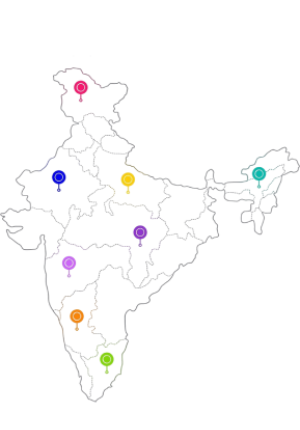
Zonal Categorisation
Zone/State Categorisation
To streamline operations and facilitate various functions, all states and Union Territories in India, along with participating international countries, have been organized into the following zones. This categorization serves the following purposes:
Determining zone toppers for performance-based awards.
Delhi NCR, Haryana, Punjab, Himachal Pradesh, Uttarakhand, J&K, Ladakh, Chandigarh, Rajasthan, Uttar Pradesh
Maharashtra, Goa, Gujarat, Daman & Diu, Dadra & Nagar Haveli, Madhya Pradesh
West Bengal, Bihar, Jharkhand, Odisha, Assam, Arunachal Pradesh, Tripura, Sikkim, Meghalaya, Mizoram, Nagaland, Manipur, Chhattisgarh
Tamil Nadu, Karnataka, Kerala, Telangana, Puducherry, Lakshadweep, Andhra Pradesh, Andaman & Nicobar
All countries except India
Study Material
Recommendation & Books
OLYMPIAD EXCELLENCE GUIDE
PREVIOUS YEAR PAPERS
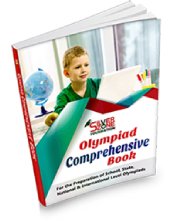
COMPREHENSIVE BOOK