Follow us
Information
- Address: SilverZone Foundation B-2, Ansal Chamber-II, Bhikaji Cama Place, New Delhi-110066(India)
- Call Us: 011-69114100(30 Lines)
- Email: info@silverzone.org


International Mathematics Olympiad 
"The only way to learn mathematics is to do mathematics.”
- Paul Halmos


More than
2,28000+
Students
About
International Mathematics Olympiad(iOM)
The International Olympiad of Mathematics (iOM) stands as a leading competition for math enthusiasts worldwide. It excites students and offers a platform to demonstrate their potential.
Key Features & Benefits for Students
- Conducted annually at national and international levels.
- Aligns with syllabi from CBSE, ICSE, and state boards.
- The International Olympiad of Mathematics goes beyond theory. It features Applied Mathematics in the exam.
- Challenges students with real-world problems.
- Develops critical thinking and problem-solving skills.
Furthermore, iOM provides students with a comprehensive report based on their performance in the Olympiad examination. This report offers an in-depth analysis of their strengths and shortcomings, allowing them to identify areas that require improvement. This feedback also motivates students to strive for excellence and push themselves to reach their full potential in the field of mathematics.
Structure of the Olympiad
Level 1
All the students of classes 1st to 12th are eligible to take part in Level 1.
Eligibility for Level 2
Top 1000 Olympiad rank holders between 4 and 1003 with minimum marks of 50% and above.
Class 1st Rank holders with minimum 75% marks and 100 participation in the respective subject from the school.
Eligibility for Level 3
International Olympiad 1st rank holders of Classes 6th to 12th from 2nd level will be eligible for level 3. Level 3 will be conducted in New Delhi, India.
Key Features Of The Olympiad
- Each class will receive a separate and class-specific question paper to ensure appropriate difficulty levels.
- All questions are objective-type (Multiple Choice Questions).
- There is no negative marking, encouraging students to attempt all questions confidently.
- The International Mathematics Olympiad is conducted only in English to maintain a standardised assessment format and ensure clarity in technical terminology used across all classes.
The Olympiad is held once a year and is conducted during school hours to ensure student convenience and maximum participation. Each participating school can select one of the three proposed dates for conducting the Olympiad. All dates will have separate sets of question papers, ensuring exam integrity and flexibility in scheduling.
Test Paper Structure
The examination is being conducted for all classes from 1st to 12th with the following details.
- For Classes 1-2: There will be 25 questions, and the duration will be 40 Minutes.
- For Classes 3-5: There will be 30 questions, and the duration will be 40 Minutes.
- For Classes 6-8: There will be 35 questions, and the duration will be 40 Minutes.
- For For Classes 9-12: There will be 40 questions, and the duration will be 50 Minutes.
Detailed guidelines for conducting the test will be shared with the school along with the question papers. For classes 1st onwards, OMR answer sheets will be provided.
Registration Of Students:
The International Mathematics Olympiad (iOM) prospectus, along with registration forms, is sent to all schools currently registered with the SilverZone Foundation. Please note that the printed prospectus may not reflect the most recent updates. The latest information on syllabus, exam format, levels, and prizes is always available on our official website. We recommend referring to it for accuracy.
For New Schools:
Schools not yet registered with SilverZone may request a prospectus by writing to us at info@silverzone.org. Once received, schools must return the completed registration forms by the specified deadline.
Important Note For Schools:
- Any school can become a registered centre for the International Mathematics Olympiad (iOM). There is no fee required to register the school itself.
- For smooth coordination and exam feasibility, a minimum of 40 students per school is required to register for the Mathematics Olympiad.
- For any clarification regarding exam rules, syllabus, paper pattern, or registration process, schools may write to us directly at info@silverzone.org
Marking Scheme and Syllabus
The tentative chapter-wise marking Scheme will help students to perform better in SilverZone Olympiads. The actual marks distribution may differ depending on the prerogative of the authors/selectors/paper setters concerned.
Number Sense
Chapters
- Backward and Forward Counting
- Ones and Tens
Computation Operations
Chapters
- Addition
- Subtraction
- Comparison
Patterns
Chapters
- Patterns
Money, Time
Chapters
- Money
- Time
Length, Weight and Comparison
Chapters
- Measurement
Geometrical Shapes
Chapters
- Identification of Geometrical Figures
Reasoning and Aptitude
Chapters
- Mental Aptitude
Scholar’s Zone
- Scholar’s Zone
Numbers Sense
Chapters
- Ones, Tens and Hundreds
Computation Operations
Chapters
- Addition
- Subtraction
- Multiplication
- Division
- Comparison
Patterns
Chapters
- Patterns
Money, Time and Calendar
Chapters
- Money
- Time and Calendar
Length, Weight and Capacity
Chapters
- Measurement
Geometrical Shapes
Chapters
- Geometrical Figures
Reasoning and Aptitude
Chapters
- Mental Aptitude
Scholar’s Zone
- Scholar’s Zone
Numbers and Their Operations
Chapters
- Number Sense and Numeration
- Addition and Subtraction
- Multiplication and Division
Parts and Wholes
Chapters
- Fractions
Money, Time and Calendar
Chapters
- Time and Calendar
- Money
Length, Weight and Capacity
Chapters
- Measurement
Geometry
Chapters
- Geometrical Shapes
Pictograph
Chapters
- Data Handling
Reasoning and Aptitude
Chapters
- Reasoning and Aptitude
Scholar’s Zone
- Scholar’s Zone
Numbers and Their Operations
Chapters
- Number Sense and Numeration
- Addition and Subtraction
- Multiplication and Division
Parts and Wholes
Chapters
- Fractions and Decimals
Money and Unitary Method
Chapters
- Money
- Unitary Method
Geometry
Chapters
- Geometrical Shapes
Area and Its Boundary
Chapters
- Perimeter and Area
Graphical Representation of Data
Chapters
- Data Handling
Reasoning and Aptitude
Chapters
- Reasoning and Aptitude
Scholar’s Zone
- Scholar’s Zone
Numbers and Their Operations
Chapters
- Number Sense and Numeration
- Numbers in Operations
- Factors and Multiples
Parts and Whole
Chapters
- Fractions and Decimals
Percentage, Ratio and Proportion
Chapters
- Percentage
- Ratio and Proportion/ Time and Distance
Geometry and Measurement
Chapters
- Measurement
- Geometry
Graphical Representation of Data
Chapters
- Data Handling
Reasoning and Aptitude
Chapters
- Reasoning and Aptitude
Scholar’s Zone
- Scholar’s Zone
Number Systems
Chapters
- Numbers and Their Operations
- Factors and Multiples
Parts and Wholes
Chapters
- Fractions and Decimals
Algebra, Ratio and Proportion
Chapters
- Algebra
- Ratio and Proportion
Geometry and Mensuration
Chapters
- Mensuration
- Geometry
Graphical Representation of Data
Chapters
- Data Handling
Reasoning and Aptitude
Chapters
- Reasoning and Aptitude
Scholar’s Zone
- Scholar’s Zone
Numbers and Their Operations
Chapters
- Integers
- Simplifying Arithmetic Expressions
- Fractions and Decimals
- Rational Numbers
- Exponents
Algebra
Chapters
- Algebraic Expressions
- Simple Equations
Ratio and its Applications
Chapters
- Ratio and Proportion
- Percentage
- Profit and Loss
- Simple Interest
Geometry and Mensuration
Chapters
- Lines and Angles
- Triangles
- Quadrilaterals
- Solid Shapes
- Perimeter
- Area of Closed Figures
Data Handling
Chapters
- Arithmetic Mean, Median, Mode
- Bar graphs
Reasoning and Aptitude
Chapters
- Reasoning and Aptitude
Scholar’s Zone
- Scholar’s Zone
Number Systems
Chapters
- Rational Numbers
- Exponents
- Square and Square Root
- Cube and Cube Root
Algebra and Geometry
Chapters
- Algebraic Expression and identities
- Factorization
- Linear Equation in one variable
- Convex and Concave polygon
- Understanding Quadrilateral
Comparing Quantities
Chapters
- Direct and inverse proportions
- Time and Work
- Percentage
- Discount and Taxes
- Compound Interest and its Application
Mensuration
Chapters
- Surface area and volume of Cube
- Cuboid and Cylinder
Data Handling
Chapters
- Introduction to Graphs
- Line graphs
- Pie chart
- Probability
Reasoning and Aptitude
Chapters
- Reasoning and Aptitude
Scholar’s Zone
- Scholar’s Zone
Number System
Chapters
- Irrational Numbers
- Real numbers and their Decimal expansions
- Operation on real Numbers
- Laws of Exponents for real numbers
Algebra
Chapters
- Polynomials in one variable
- Zeroes of a polynomial
- Factorization of Polynomials
Geometry and Co-ordinate geometry
Chapters
- Lines and angles
- Triangles
- Quadrilaterals
- Circles
- Linear equation in two variables
- Solution of Linear Equations
- Co-ordinate geometry
Statistics
Chapters
- Bar graphs
- Histogram
- Frequency Polygon
Mensuration
Chapters
- Surface area and volume of Right Circular Cones and Spheres
- Heron’s Formula
Reasoning and Aptitude
Chapters
- Reasoning and Aptitude
Scholar’s Zone
- Scholar’s Zone
Number System
Chapters
- Rational and Irrational Numbers
Algebra
Chapters
- Polynomials
- Quadratic equation
- Arithmetic Progression
Geometry & Co-ordinate geometry
Chapters
- Similar figures
- Similarity of Triangles
- Circles
- Tangent to a circle
- Pair of Linear equations in two variables
- Distance Formula
- Section Formula
Trigonometry
Chapters
- Trigonometry
- Height and Distance
Statistics and Probability
Chapters
- Mean, Mode and Median of grouped Data
- Probability of Events
Mensuration
Chapters
- Surface Area and Volume
Reasoning and Aptitude
Chapters
- Reasoning and Aptitude
Scholar’s Zone
- Scholar’s Zone
Sets & Functions
Chapters
- Sets
- Relations and Functions
- Trigonometric functions
Algebra
Chapters
- Complex number
- Sequence and series
- Permutation and combination
- Inequality
- Quadratic equation
- Binomial Theorem
Co-ordinate Geometry
Chapters
- Straight lines
- Conic Sections
Calculus
Chapters
- Limits and derivatives
Statistics & Probability
Chapters
- Measures of Dispersion
- Range
- Mean Deviation
- Variance and Standard Deviation
- Axiomatic Approach to Probability
Reasoning and Aptitude
Chapters
- Reasoning and Aptitude
Scholar’s Zone
- Scholar’s Zone
Relations and Functions
Chapters
- Types of Relations
- Types of Functions
- Inverse Trigonometric functions
Algebra
Chapters
- Matrices and Determinants
Vectors & 3D
Chapters
- Vector algebra and Three dimensional geometry
Calculus
Chapters
- continuity and differentiability
- Applications of Derivatives
- Integrals
- Application of Integrals
- Differential Equation
Linear programming
Chapters
- Linear Programming Problem
Probability
Chapters
- Independent Events
- Conditional Probability
- Multiplication Theorem on Probability
- Bayes' Theorem
Reasoning and Aptitude
Chapters
- Reasoning and Aptitude
Scholar’s Zone
- Scholar’s Zone
Raw Score Calculation
The raw score is computed by multiplying each correct answer by its corresponding base marks and summing the results. In mathematical terms: Raw Score = SUM (correct answer × subsequent base Marks).
Total Marks Calculation
Total Marks are determined by adding the raw score to the sum of the weightage of correct answers. Each question carries an additional weightage, starting from .0001 and increasing incrementally (.0002, .0003, and so forth). For instance, Question No. 1 has a weightage of .0001, Question No. 2 has .0002, and so on. This weightage is utilized to resolve ties when calculating Class/Zonal/Olympiads ranks.
Rank Structure:
Class Rank
This encompasses all students from various sections/divisions of the same class within the same school.
Olympiad Rank
This encompasses all students from India and abroad belonging to the same class.
Important Notes:
Each winner is entitled to one award per exam, receiving the higher-level award only. For example, international top three rank holders will receive awards based on their international ranks, and any awards based on their Zonal ranks will be passed to the next rank holder. Similarly, if a Zonal award winner also qualifies for a class award, the class award will be given to the next rank holder.
Sample Papers
Sample Question Papers
The detailed Syllabus and Sample Test Paper are provided in this website, click the following links to download the Syllabus and Sample Test Paper class wise. For Books please contact, School Coordinator or book your order online now.
Prizes
International Olympiad
Rank Awards

1st Olympiad rank
The 1st International Olympiad rank holder in each class will receive a Prize of
10,000/-.
2nd Olympiad rank
The 2nd International Olympiad rank holder in each class will receive a Prize of
7,500/-.

3rd Olympiad rank
The 3rd International Olympiad rank holder in each class will receive a Prize of
5000/-.
Other Prizes
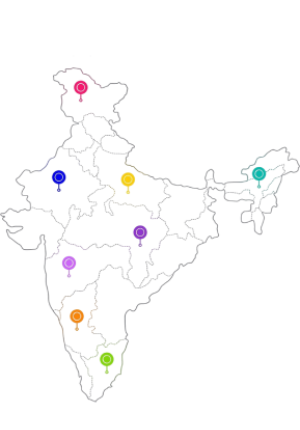
Zonal Categorisation
Zone/State Categorisation
To streamline operations and facilitate various functions, all states and Union Territories in India, along with participating international countries, have been organized into the following zones. This categorization serves the following purposes:
Determining zone toppers for performance-based awards.
Delhi NCR, Haryana, Punjab, Himachal Pradesh, Uttarakhand, J&K, Ladakh, Chandigarh, Rajasthan, Uttar Pradesh
Maharashtra, Goa, Gujarat, Daman & Diu, Dadra & Nagar Haveli, Madhya Pradesh
West Bengal, Bihar, Jharkhand, Odisha, Assam, Arunachal Pradesh, Tripura, Sikkim, Meghalaya, Mizoram, Nagaland, Manipur, Chhattisgarh
Tamil Nadu, Karnataka, Kerala, Telangana, Puducherry, Lakshadweep, Andhra Pradesh, Andaman & Nicobar
All countries except India
Study Material
Recommendation & Books
OLYMPIAD EXCELLENCE GUIDE
PREVIOUS YEAR PAPERS
COMPREHENSIVE BOOK