Follow us
Information
- Address: SilverZone Foundation B-2, Ansal Chamber-II, Bhikaji Cama Place, New Delhi-110066(India)
- Call Us: 011-69114100(30 Lines)
- Email: info@silverzone.org


International Computer Science Olympiad 
“Great computer hardware is only a doorstop without great software”
- John McCarthy


More than
2,28000+
Students
About
International Computer Science Olympiad (iCSO)
The International Computer Science Olympiad (iCSO) is an annual competition that aims to assess students' abilities and aptitude in the field of computer science. The iCSO exam syllabus aligns with CBSE, ICSE, and state board curricula.
Key Benefits for Students:
- Skill Enhancement: Test and sharpen computer science proficiency through real-world programming challenges and logical reasoning tasks.
- Global Exposure: Gain insight into international standards in computer science Olympiad events, preparing you for advanced competitions.
- Certifications and Recognition: Earn prestigious iCSO certificates, medals, and rankings that boost resumes and college applications.
- Career Preparation: Build a strong foundation for higher studies in computer science, IT, or software engineering careers.
- Confidence Boost: Overcome challenges in a competitive environment, fostering resilience and a growth mindset for future success.
The International Computer Science Olympiad (iCSO) is a premier platform for students to showcase talent in computer science Olympiad events. Compete at national and international levels, earn recognition, and enhance your expertise.
Key Features Of The Olympiad
- The International Computer Science Olympiad (iCSO) is conducted in a single level (Level 1) and is open to all students from Classes 1 to 12.
- Each class will receive a separate and class-specific question paper to ensure appropriate difficulty levels.
- All questions are objective-type (Multiple Choice Questions).
- There is no negative marking, encouraging students to attempt all questions confidently.
- The International Computer Science Olympiad (iCSO) is conducted only in English to maintain a standardised assessment format and ensure clarity in technical terminology used across all classes.
The Olympiad is held once a year and is conducted during school hours to ensure student convenience and maximum participation. Each participating school can select one of the three proposed dates for conducting the Olympiad. All dates will have separate sets of question papers, ensuring exam integrity and flexibility in scheduling.
Test Paper Structure
The language medium is English only. The examination is being conducted for all classes from 1st to 12th with the following details.
- For Classes 1-2: There will be 25 questions, and the duration will be 40 Minutes.
- For Classes 3-5: There will be 30 questions, and the duration will be 40 Minutes
- For Classes 6-8: There will be 35 questions, and the duration will be 40 Minutes.
- For For Classes 9-12: There will be 40 questions, and the duration will be 50 Minutes.
Detailed guidelines for conducting the test will be shared with the school along with the question papers. For classes 1st onwards, OMR answer sheets will be provided.
Registration Of Students:
The International Computer Science Olympiad (iCSO) prospectus, along with registration forms, is sent to all schools currently registered with the SilverZone Foundation. Please note that the printed prospectus may not reflect the most recent updates. The latest information on syllabus, exam format, levels, and prizes is always available on our official website. We recommend referring to it for accuracy.
For New Schools:
Schools not yet registered with SilverZone may request a prospectus by writing to us at info@silverzone.org. Once received, schools must return the completed registration forms by the specified deadline.
Important Note For Schools:
- Any school can become a registered centre for Olympiads. There is no fee required to register the school itself.
- For smooth coordination and exam feasibility, a minimum of 40 students per school is required to register for the Computer Science Olympiad.
- For any clarification regarding exam rules, syllabus, paper pattern, or registration process, schools may write to us directly at info@silverzone.org
Marking Scheme and Syllabus
Chapter-wise marking Scheme will help students to perform better in SilverZone Olympiads
Computer Science
Chapters
- Introduction of computer
- Main Parts of Computers
- Uses of computer
- Introduction to Keyboard and Mouse
- Starting and Shutting down Computer
- Introduction to MS Paint
Reasoning and Aptitude
Chapters
- Reasoning and Aptitude
Scholar’s Zone
- Scholar’s Zone
Computer Science
Chapters
- Types of computers
- Parts of a Computer
- Working of the computer
- Keyboard and mouse usage
- Uses of computer in our world
- Notepad
- MS-Paint
- WordPad
Reasoning and Aptitude
Chapters
- Reasoning and Aptitude
Scholar’s Zone
- Scholar’s Zone
Computer Science
Chapters
- Introduction to hardware and Software
- Introduction to Windows 10
- MS-Paint
- MS-Word 2016
- WordPad
- Internet
- Notepad
Reasoning and Aptitude
Chapters
- Reasoning and Aptitude
Scholar’s Zone
- Scholar’s Zone
Computer Science
Chapters
- History of computer
- Input and Output Devices
- Memory and Storage Devices
- Windows 10
- Software Classification
- MS Word 2016
- MS-PowerPoint 2016
- Internet
Reasoning and Aptitude
Chapters
- Reasoning and Aptitude
Scholar’s Zone
- Scholar’s Zone
Computer Science
Chapters
- Generation of computer
- Windows 10
- MS-Word 2016
- MS-Excel 2016
- PowerPoint 2016
- Internet and E-mail
Reasoning and Aptitude
Chapters
- Reasoning and Aptitude
Scholar’s Zone
- Scholar’s Zone
Computer Science
Chapters
- Computer Languages
- Small Basic
- Algorithm and flow chart
- Mail Merge/MS-Word
- MS-Excel/MS-PowerPoint
- Internet
Reasoning and Aptitude
Chapters
- Reasoning and Aptitude
Scholar’s Zone
- Scholar’s Zone
Computer Science
Chapters
- Basics of Operating System
- Small Basic
- Introduction to Number System
- Computer Viruses
- MS-Excel / MS-PowerPoint / MS-Word
- Internet
Reasoning and Aptitude
Chapters
- Reasoning and Aptitude
Scholar’s Zone
- Scholar’s Zone
Computer Science
Chapters
- Memory And Storage
- HTML
- CSS
- Computer Network
- Data Representation and Number System
- Cloud Computing
Reasoning and Aptitude
Chapters
- Reasoning and Aptitude
Scholar’s Zone
- Scholar’s Zone
Computer Science
Chapters
- Basics of Information Technology
- Characteristics of a Computer System
- Memory
- Storage Devices
- I/O Devices
- Types of Software
- Computer Networking
- Multimedia
- Cyber Safety
- Safely Browsing the Web and Using Social Networks
- Safely Accessing Websites
- Cyber Safety
- Office Tools
- Word Processing
- Presentation Tools
- Spreadsheets
- Python Programming Language
- Introduction to Programming
- Data Types and Variables
- Control Structures
- Functions
- Lists and Arrays
- Input and Output
Reasoning and Aptitude
Chapters
- Reasoning and Aptitude
Computer Science
Chapters
- Networking
- Internet
- Services Available on the Internet
- Web Services
- Mobile Technologies
- HTML
- Introduction to Web Page Designing using HTML
- HTML Basics
- Accessing a Web Page using a Web Browser
- HTML Tags
- Font Tags
- Inserting Images
- HTML Forms
- Embedding Audio and Video
- Creating Tables
- Links and Anchor Elements
- Cascading Style Sheets (CSS)
- Cyber Ethics
- Netiquettes
- Introduction to software licenses
- Introduction to intellectual property rights
- Introduction to freedom of information
- Introduction to e-commerce
Reasoning and Aptitude
Chapters
- Reasoning and Aptitude
Computer Fundamental
Chapters
- Computer System
Programming Language
Chapters
Students must select either Informatics Practices or Computer Science
- Informatics Practices
- Introduction to Python
- Database concepts and the Structured Query Language
- Introduction to Emerging Trends
- Artificial Intelligence (AI)
- Big Data
- Internet of Things (IoT)
- Cloud Computing
- Grid Computing
- Blockchains
- Computer Science
- Computational Thinking and Programming (Python)
- Society, Law, and Ethics
Reasoning and Aptitude
Chapters
- Reasoning and Aptitude
Computer Fundamental
Chapters
- Computer Fundamental
Programming Language
Chapters
Students must select either Informatics Practices or Computer Science
- Informatics Practices
- Data Handling
- Database Query using SQL
- Computer Networks
- Societal Impacts
- Computer Science
- Programming and Computational Skills (Python)
- Computer Networks
- Data Management
Reasoning and Aptitude
Chapters
- Reasoning and Aptitude
Raw Score Calculation
The raw score is computed by multiplying each correct answer by its corresponding base marks and summing the results. In mathematical terms: Raw Score = SUM (correct answer × subsequent base Marks).
Total Marks Calculation
Total Marks are determined by adding the raw score to the sum of the weightage of correct answers. Each question carries an additional weightage, starting from .0001 and increasing incrementally (.0002, .0003, and so forth). For instance, Question No. 1 has a weightage of .0001, Question No. 2 has .0002, and so on. This weightage is utilized to resolve ties when calculating Class/Zonal/Olympiads ranks.
Rank Structure:
Class Rank
This encompasses all students from various sections/divisions of the same class within the same school.
Olympiad Rank
This encompasses all students from India and abroad belonging to the same class.
Important Notes:
Each winner is entitled to one award per exam, receiving the higher-level award only. For example, international top three rank holders will receive awards based on their international ranks, and any awards based on their Zonal ranks will be passed to the next rank holder. Similarly, if a Zonal award winner also qualifies for a class award, the class award will be given to the next rank holder.
Sample Papers
Sample Question Papers
The detailed Syllabus and Sample Test Paper are provided in this website, click the following links to download the Syllabus and Sample Test Paper class wise. For Books please contact, School Coordinator or book your order online now.
Prizes
International Olympiad
Rank Awards

1st Olympiad rank
The 1st International Olympiad rank holder in each class will receive a Prize of
10,000/-.
2nd Olympiad rank
The 2nd International Olympiad rank holder in each class will receive a Prize of
7,500/-.

3rd Olympiad rank
The 3rd International Olympiad rank holder in each class will receive a Prize of
5000/-.
Other Prizes
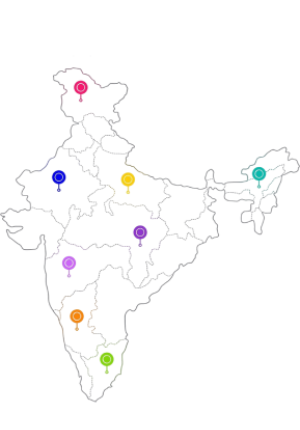
Zonal Categorisation
Zone/State Categorisation
To streamline operations and facilitate various functions, all states and Union Territories in India, along with participating international countries, have been organized into the following zones. This categorization serves the following purposes:
Determining zone toppers for performance-based awards.
Delhi NCR, Haryana, Punjab, Himachal Pradesh, Uttarakhand, J&K, Ladakh, Chandigarh, Rajasthan, Uttar Pradesh
Maharashtra, Goa, Gujarat, Daman & Diu, Dadra & Nagar Haveli, Madhya Pradesh
West Bengal, Bihar, Jharkhand, Odisha, Assam, Arunachal Pradesh, Tripura, Sikkim, Meghalaya, Mizoram, Nagaland, Manipur, Chhattisgarh
Tamil Nadu, Karnataka, Kerala, Telangana, Puducherry, Lakshadweep, Andhra Pradesh, Andaman & Nicobar
All countries except India
Study Material
Recommendation & Books
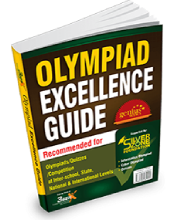
OLYMPIAD EXCELLENCE GUIDE
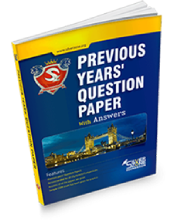
PREVIOUS YEAR PAPERS
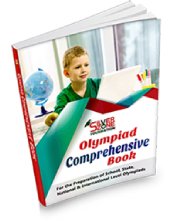
COMPREHENSIVE BOOK